Feeling Confused About What to Learn Next? Here’s How to Get Clarity

Abiodun Adekunle
Social Media Strategist at Uvivio
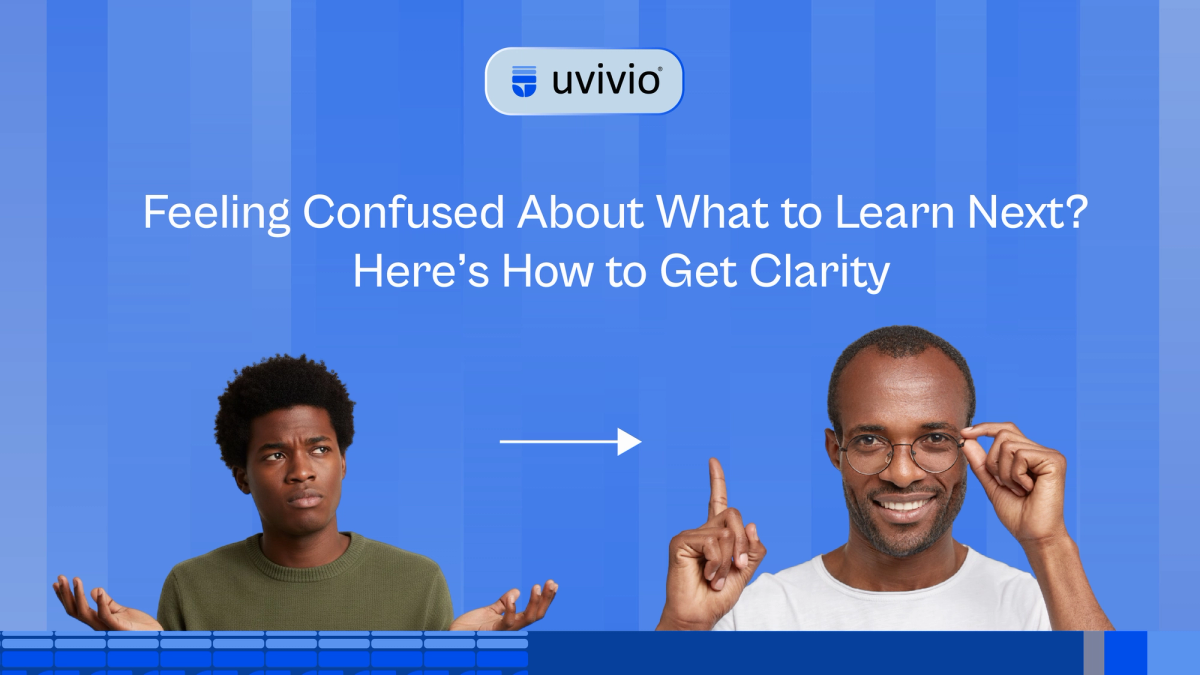
If you feel confused about what to learn next, you’re not alone and more importantly, there’s nothing wrong with you.
You see, learning opportunities are everywhere. Courses, bootcamps, certifications, YouTube tutorials, newsletters, and hot skill lists appear daily. Ironically, this abundance is exactly why so many people feel stuck.
The problem isn’t a lack of options.It’s a lack of clarity.
This article will help you understand why learning confusion happens and, more importantly, how to move from uncertainty to confident, intentional learning.
Why So Many Learners Feel Stuck Today
Confusion around learning is not a sign of laziness or low ability. In fact, it often affects curious, motivated people the most.
Here’s why:
- Too many choices create decision fatigue
- Contradictory advice pulls you in different directions
- Pressure to keep up replaces thoughtful decision-making
- Success stories online rarely show the full picture
When every path looks promising, choosing one feels risky. So many people stay in research mode, reading, watching, bookmarking, without actually moving forward.
This isn’t procrastination. It’s overwhelming
Why Just Start Learning Something Is Bad Advice
You’ve probably heard this before:
Don’t overthink it. Just start learning something.
While action is important, action without direction creates frustration.
Learning randomly may keep you busy, but it rarely creates progress. Over time, this leads to:
- Half-finished courses
- Scattered knowledge
- Reduced confidence
A sense of I’ve learned a lot, but nothing changed
Experienced professionals rarely learn this way. They are deliberate, not reactive.
The Question You’re Really Trying to Answer
Most people think they’re asking:
- What should I learn next?
But the real question is:
- What am I trying to achieve?
Learning confusion often comes from skipping this step.
Before choosing a skill, you need to understand:
- What kind of work do I want to do?
- What problems do I want to solve?
- What does success look like for me in the next year?
Until this is clear, every skill will feel both interesting and wrong at the same time.
Step One: Define the Outcome You Want
Skills are tools. Outcomes are destinations.
Instead of starting with:
- Coding
- Design
- Data
- Marketing
- AI
Start with outcomes like:
- Increased income
- Career transition
- Freelance independence
- Thought leadership
- Technical mastery
Ask yourself:
- Where do I want to be in 6–12 months?
- How do I want my life or work to change?
- Who benefits from the value I create?
When the outcome is clear, skill selection becomes much easier.
Step Two: Take Inventory of What You Already Have
Many people overlook their existing skills because they’re focused on what they lack.
But clarity often comes from recognition, not accumulation.
Consider:
- Past roles or responsibilities
- Informal skills gained through experience
- Strengths others consistently point out
- Tasks you perform with confidence
These are signals. The right next skill often builds on what’s already there.
Step Three: Identify the ONE Gap That Matters Most
One of the biggest mistakes learners make is trying to learn everything at once.
Progress comes from prioritisation.
Ask:
- What single skill would create the biggest positive change right now?
- What skill removes the biggest obstacle in my path?
- What can I realistically focus on without burnout?
Experienced learners focus on leverage, not volume.
Why Mentorship Changes the Clarity Equation
Self-learning is valuable, but it has limits especially when you’re unsure what direction to take.
One reason mentorship works so well is simple:
You can’t see your own blind spots.
People who have already walked the path can:
- Spot misalignment quickly
- Help you avoid unnecessary detours
- Offer context that courses don’t provide
- Shorten the time between effort and results
This is why mentorship-led platforms like Uvivio exist not to replace learning, but to guide it with experience.
A Simple Framework to Decide What to Learn Next
Before enrolling in anything, run it through this clarity check:
The C.L.E.A.R Framework
C – Clarify your desired outcome
L – Leverage existing strengths
E – Evaluate real market or audience need
A – Assess effort versus return
R – Review support systems and feedback
If a skill doesn’t pass most of these filters, pause. That pause alone can save months of misdirected effort.
Common Mistakes That Keep People Confused
Many learners stay stuck because they:
- Chase trends instead of alignment
- Learn in isolation without feedback
- Consume more content instead of applying
- Compare their timeline to others
Progress isn’t about speed. It’s about direction.
How You Know You’ve Found the Right Thing to Learn
When you’re on the right path:
- Learning feels focused, not frantic
- Progress becomes visible and measurable
- Confidence grows with application
- Decisions become easier, not harder
Clarity creates momentum.
Clarity Is the First Skill to Learn
Feeling confused about what to learn next doesn’t mean you’re failing. It means you’re at a decision point.
Instead of rushing into another course, pause. Reflect. Seek perspective. Get guidance.
Clarity is not something you wait for , it’s something you build intentionally.
And when clarity comes first, learning finally starts to work.
Teach smarter with Uvivio
Uvivio aligns mentors and mentees around clear goals, structured lessons, and tight feedback loops—so every session builds momentum.
Get started now